Every time you search on Google, something interesting happens behind the scenes. Results don’t just appear randomly. Google watches how people interact with those results and quietly adjusts what shows up next.
This behavior-driven process is known as SERP action prediction, where Google learns from user actions and uses that data to reorder results when needed. Let’s break this down in an easy, natural way.
Table of Contents
SERP Action Prediction
What Is SERP and Why It Matters
Before going deeper, let’s clear a basic doubt: what is SERP? SERP stands for Search Engine Results Page. It is the page you see after typing a query into Google. This page is the first thing that visitors see in search results, and it strongly shapes their next action.
A SERP is not just a list of blue links anymore. It has evolved to match how people search on Google today, which is faster, more visual, and more intent-driven.
What Are Google SERP Results?
So, what are Google SERP results exactly? They are the responses Google shows based on a user’s query. These results can change depending on location, device, and even recent search behavior.
SERP results are designed to predict what the user wants most at that moment. That’s where action prediction comes into play.
SERPs Can Include More Than Just Links
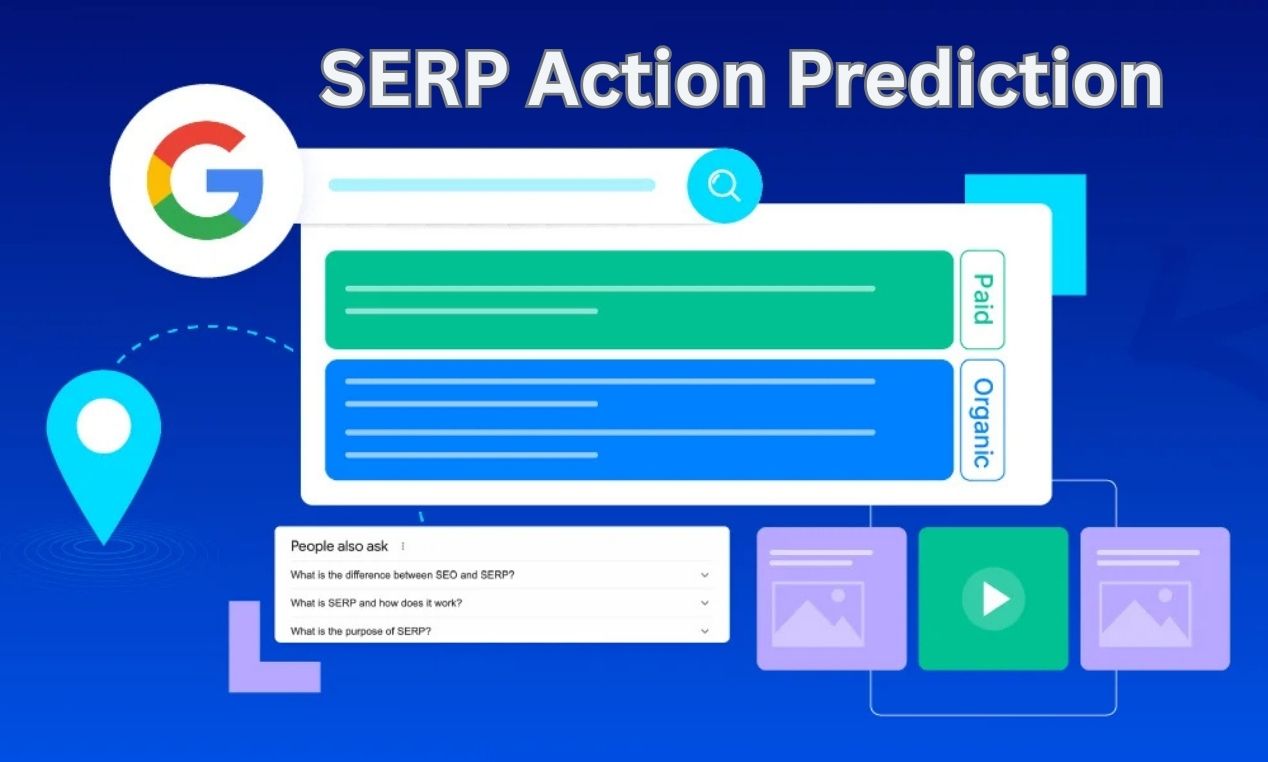
Modern SERPs can include many elements beyond traditional web pages. You might see featured snippets, image packs, video results, local listings, and news sections. Paid listings also appear in many searches.
This is where SERP Google Ads come in. These ads are placed based on bidding and relevance, but user behavior still affects how often they get clicked. If users skip certain results repeatedly, Google takes notice.
What Is the Google Algorithm to Order Results?
People often ask, what is the Google algorithm to order results? The answer isn’t simple because Google uses multiple systems together. While backlinks and content relevance still matter, user behavior adds a real-time layer.
If users consistently choose one result over others, that result may move up. If users quickly leave a page and return to search, Google may push that page down.
How People Search on Google Has Changed
Understanding how people search on Google is key to understanding SERP action prediction. Users now scan quickly, click selectively, and expect instant clarity. They don’t read every result. They choose what looks most helpful at first glance.
This behavior teaches Google which titles, descriptions, and formats actually work. Over time, Google reshapes SERPs to reflect what users prefer, not just what websites claim to offer.
Why User Behavior Influences SERP Order
Google’s main goal is to reduce friction. If a user finds what they need quickly, that’s a success. SERP action prediction helps Google identify which pages deliver that experience.
Some key behaviors Google watches include:
- Which result gets clicked first
- How long users stay on the page
- Whether users scroll or interact
- If users return to the SERP
The Role of First Impressions in SERPs
Since the SERP is the first thing visitors see in search results, first impressions matter a lot. Titles, meta descriptions, and URL clarity all influence clicks.
If users repeatedly ignore a result, Google may assume it doesn’t match intent well. On the other hand, a result that attracts clicks and keeps users engaged sends a strong positive signal.
SERP Action Prediction and Instant Reordering
Unlike older systems that relied on slow updates, modern SERPs can shift quickly. Action prediction allows Google to react faster to user preferences. This doesn’t mean rankings change every minute, but small adjustments can happen more often than people think.
This is why two people searching the same term might see slightly different results. Google is testing, learning, and refining constantly.
What This Means for Content Creators
For publishers and bloggers, this means one thing: write for people first. Clear answers, readable structure, and honest titles matter more than forcing keywords.
If your content matches intent and keeps users engaged, SERP action prediction works in your favor. If not, Google may quietly move your page down, even if the technical SEO looks fine.
A Short Wrap-Up
SERP action prediction shows how closely Google listens to users. Search results are not fixed; they respond to real behavior. By understanding what SERPs are, how results are ordered, and how people search on Google, it becomes clear why user experience matters so much.