

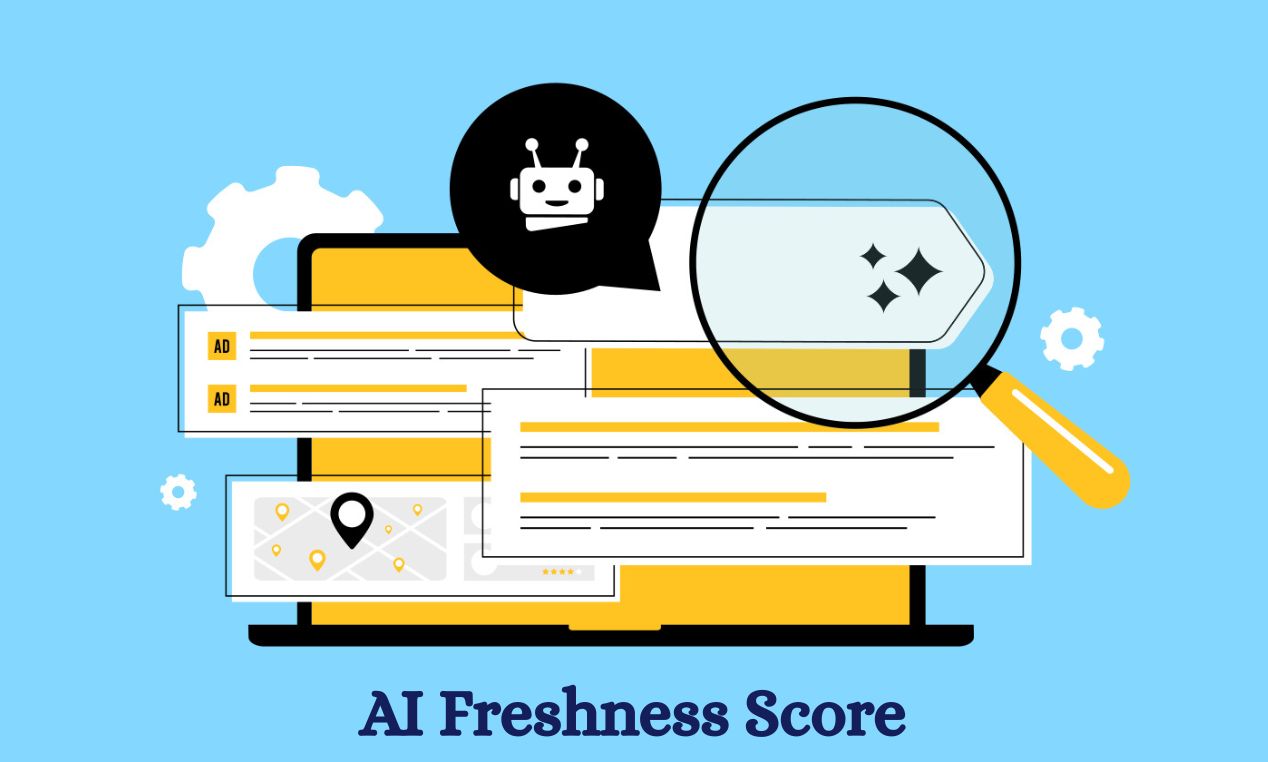
If you publish content online, you’ve probably noticed how some articles get indexed within minutes, while others take days or weeks. In 2026, one of the biggest factors behind fast indexing is something many creators don’t fully understand yet the AI Freshness Score.
Google has been quietly adjusting how it reads, updates, and values content, and freshness plays a bigger role than before.
This isn’t just about posting often. It’s about how relevant, updated, and useful your content looks to Google’s AI systems. And with so much talk about questions like “Will 90% of online content be AI-generated by 2026?”, freshness becomes even more important because search engines need a way to decide what feels genuinely helpful for real users.
Table of Contents
AI Freshness Score
What the AI Freshness Score Really Means
The AI Freshness Score refers to how Google estimates the “current value” of your content.
Instead of only checking publish dates, Google now looks at how often you update information, how relevant your examples are, whether your data is still correct, and how your topic connects to present-day search patterns.
This shift became even more noticeable with the rise of AI in SEO 2025, where creators began reusing old content with minor tweaks. Google started prioritizing content that feels timely, not recycled.
Why Freshness Matters More in 2026
Search engines are dealing with huge amounts of content. And yes, a large part of the internet is predicted to be AI-generated soon.
When people ask, “Will 90% of online content be AI-generated by 2026?”, the possibility isn’t too far. Because of that, Google is using freshness as a filter to reward content that feels updated and reliable.
Google’s system checks:
- How recently you updated your article
- Whether new facts or examples have been added
- If your internal links guide readers to more helpful pages
- Whether readers stay on the page or leave quickly
Does Google Penalize AI Content in 2025?
Many bloggers worry about this, and the short answer is: Google doesn’t penalize something just because AI was involved. What matters is usefulness, clarity, and originality.
But here’s where freshness enters again. AI-generated content often looks generic and similar to other pages. Google won’t “punish” it, but it may not reward it either unless you update it, personalize it, and make it genuinely helpful.
SEO for AI Search: What’s Changing?
The next generation of search is becoming more predictive. Instead of only matching keywords, search engines try to understand intent, context, and patterns. That’s why SEO for AI search looks different from traditional SEO.
Some shifts you may notice:
- Queries are becoming more conversational
- Search engines rely more on behavior and fewer on keywords
- Freshness matters more because people expect updated answers
- Content needs depth, not repetition
How to Optimize Content for AI Search
If you’re wondering how to stay visible as search evolves, here are simple and natural ways to adapt without overthinking:
1. Update old posts regularly
Instead of publishing something new every day, refresh your important pages. Add new data, fix outdated lines, and improve readability.
2. Answer related questions naturally
People ask broader questions today, like “What industries will AI completely take over by 2026?” If it fits your topic, include such questions in a simple, conversational way. It increases contextual relevance.
3. Use internal linking smartly
If you write about AI trends or SEO strategies, link them to your other posts. This helps Google understand your site structure.
4. Write for humans first
Avoid robotic formatting. Add your own experiences or observations. Write the way you talk.
5. Keep an eye on the 30% rule in AI
Many experts mention the “30% rule in AI”, which suggests that automation should help with tasks but not replace the human part completely. This applies to content too use AI as support, not as the entire structure.
The Real Role of AI Freshness Score in Fast Indexing
Fast indexing in 2026 is not just about technical SEO. It’s about showing search engines that your content is active, updated, and worth paying attention to. If your pages stay stale for months, Google may take longer to revisit them.
But when you refresh, expand, and improve your content regularly, your pages get crawled more often which leads to faster indexing and better performance.
Conclusion
The AI Freshness Score is becoming a quiet but important part of SEO. With so much content being published daily, search engines use freshness to identify what feels current and useful to real people.
If you focus on helpful updates, natural writing, and strong context, you won’t just index faster you’ll build a site that stays relevant as search continues to evolve.










1 thought on “AI Freshness Score: Secret Behind Fast Indexing in 2026”