

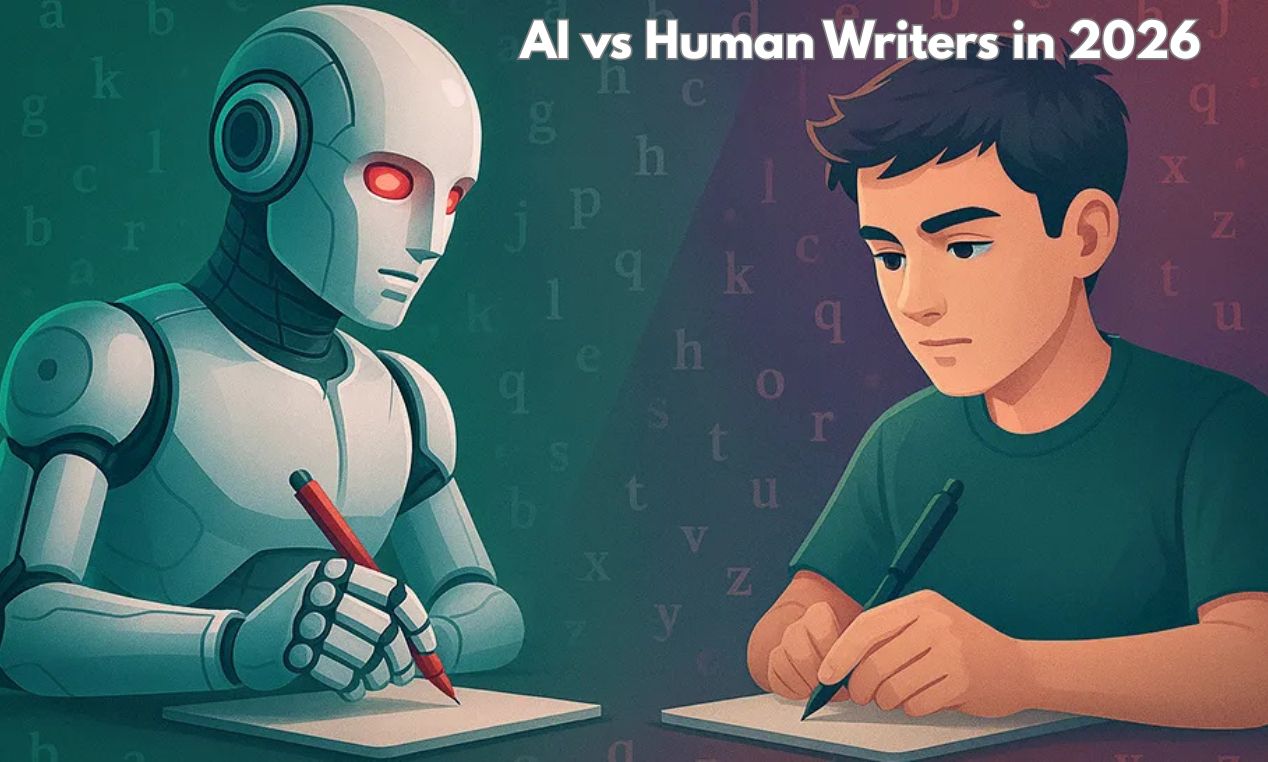
If you’ve been creating content for a while, you’ve probably noticed how much the writing landscape has changed. Artificial intelligence tools can now generate full articles in seconds.
But as we step into 2026, the debate around AI vs Human Writers in 2026 is getting louder everyone wants to know whether Google actually trusts AI-written content, or if it still prefers the human touch.
Let’s talk about what’s really going on behind the scenes, how Google views AI content, and how you can strike the right balance between machine efficiency and human creativity.
Table of Contents
AI vs Human Writers in 2026
Does Google Accept AI Written Content?
The short answer is yes but with conditions. Google doesn’t ban AI-written articles. What matters is quality. If the content provides real value, answers the reader’s question, and feels natural, it can rank.
However, when it comes to AI vs Human Writers in 2026, Google’s focus isn’t on who typed the words it’s on how helpful the content is. If your article looks like it was produced just to fill space with keywords, Google’s algorithms will likely push it down.
So yes AI-generated text can make it to the top of search results, but only if it’s backed by accuracy, structure, and a bit of human oversight.
Does Google Prefer Human Content?
Here’s where the line becomes clear. While Google doesn’t discriminate between AI or human writers, it does reward authenticity and expertise things that are easier to show when a human is involved.
In the ongoing debate of AI vs Human Writers in 2026, the key difference lies in depth and experience. When a person writes from real-world knowledge, they bring insights, emotions, and examples that AI can’t fully replicate.
For bloggers, this means you can absolutely use AI to save time, but you still need to add your own perspective, facts, and opinions. That’s the sweet spot between automation and authenticity.
Does AI Content Rank in Google 2025?
Back in 2025, SEO professionals noticed a big shift. AI content started ranking more often but not all of it. Articles that were pure AI output, with no editing or personal touch, rarely stayed in top positions for long.
The reason? Google’s systems are now excellent at detecting patterns typical of unedited AI writing like repetitive phrases, unnatural tone, or lack of context. But when creators use AI responsibly as a starting point instead of a replacement those pages can perform really well.
Google Algorithm Update for AI Content
Each year, Google refines how it evaluates online content and 2026 is no exception. The latest algorithm updates for AI content focus on two main things: authenticity and originality.
Google wants to make sure the web doesn’t get flooded with low-effort, automatically generated pages. That’s why it’s becoming smarter at analyzing context, structure, and author credibility.
If your blog provides something genuinely useful like personal insights, data-backed facts, or case studies it will still rank well, even if AI helped create parts of it.
Optimizing Content for AI Search
As AI becomes more integrated into search engines think of Google’s Search Generative Experience (SGE) optimization is also changing. Instead of just targeting keywords, you now need to write in a way that AI systems can easily interpret and summarize.
That means:
- Use clear, structured headings.
- Answer specific questions directly (great for snippets and AI summaries).
- Include context and depth not just surface-level text.
Optimizing content for AI search isn’t about writing for robots it’s about making your writing more useful and scannable. And that’s something both readers and algorithms appreciate.
Will AI Replace Authors?
This is the question everyone loves to ask and the honest answer is no. AI will change how writers work, but it won’t replace those who bring expertise, creativity, and authenticity.
AI can create outlines, generate visuals, or help with repetitive writing tasks. But it still lacks intuition that human understanding of tone, emotion, and connection. Great writing isn’t just about delivering facts; it’s about how you make readers feel. That’s something machines still can’t fully master.
The future of writing will be collaborative. AI will handle the routine parts, while humans will guide the creativity, storytelling, and authenticity.
Conclusion
So, does Google trust AI or human writers more? The truth is it trusts quality. If your content, whether written by AI, edited by you, or co-created, genuinely helps readers, Google will reward it.
AI tools are here to stay, but human insight is what gives content its power. The smartest creators in 2026 won’t fight AI they’ll use it wisely, polish it with their expertise, and publish content that both readers and Google can trust.








1 thought on “AI vs Human Writers in 2026: Which Content Does Google Really Trust?”